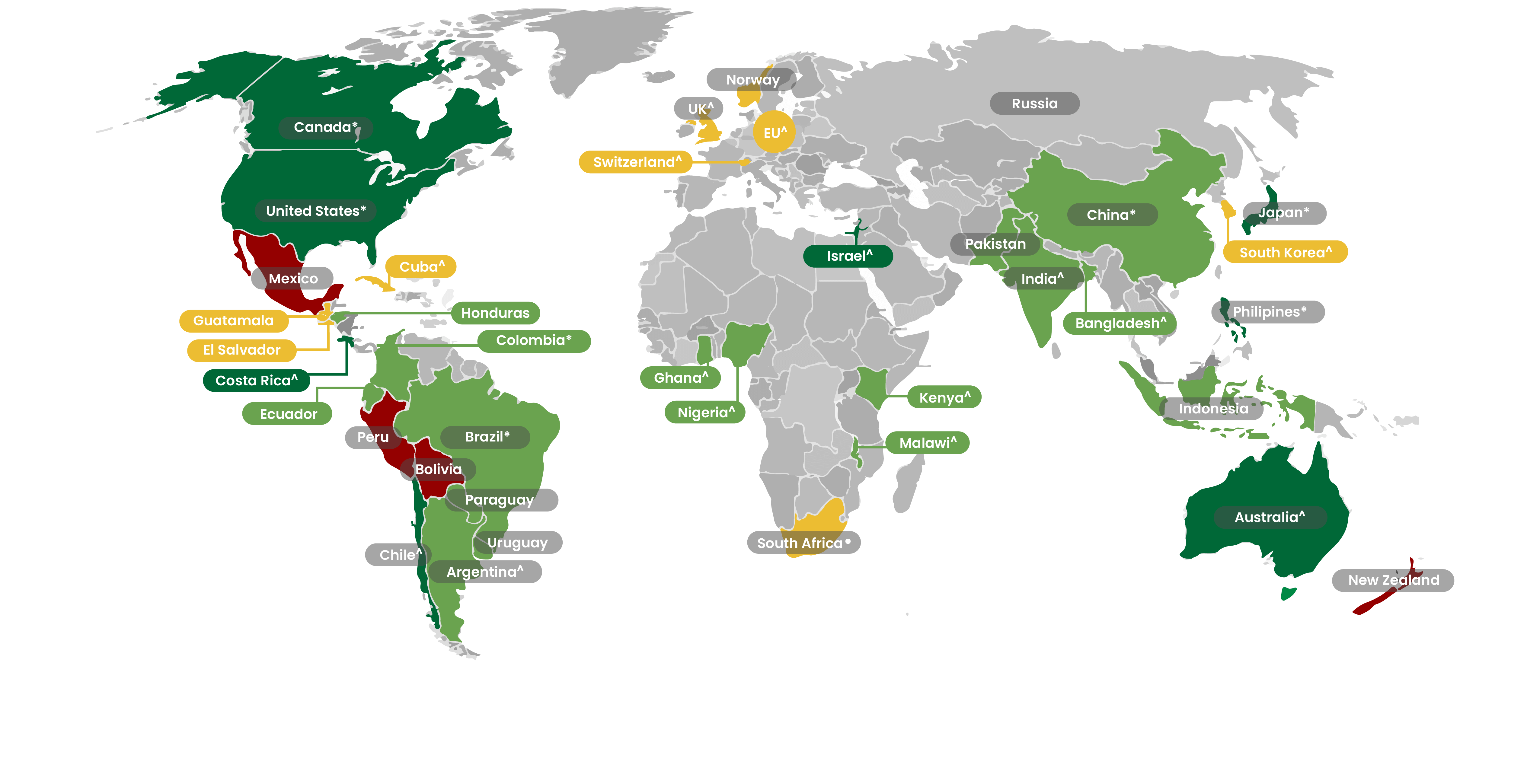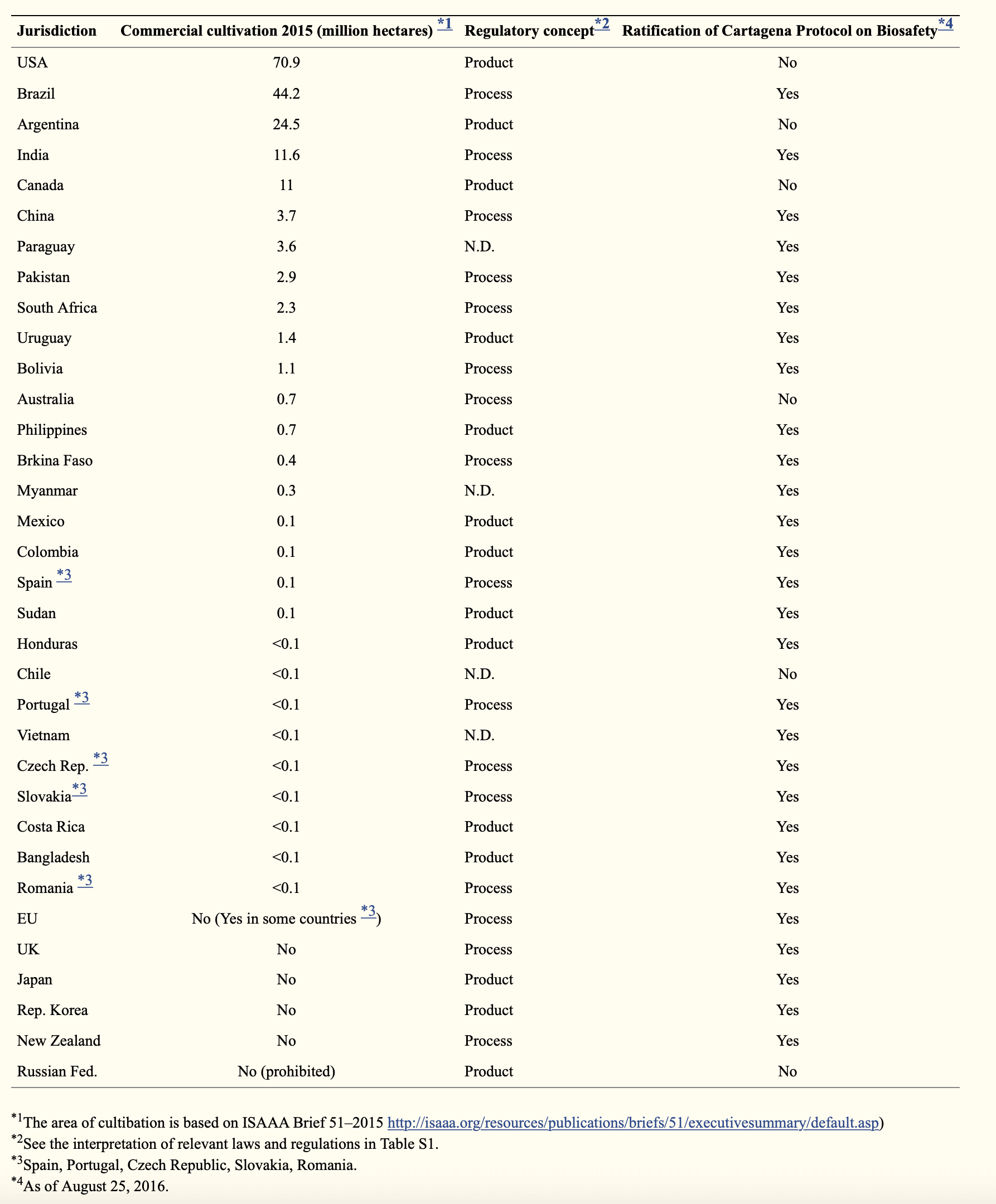



Worldwide, gene drive regulations are in flux. Gene drives are being developed using transgenic technology (GMOs) that contain foreign genes, as well as gene editing, including CRISPR (synthetic gene drives), which do not, complicating regulatory oversight as gene editing and GMOs are often regulated differently.
In 2017, the Norwegian Biotechnology Advisory Board recommended a moratorium on the use of gene drives until international regulations for handling and risk assessment are in place. Gene drive research, including field trials, could be allowed if they are able to be contained. Research field trials must be developed according to EU and UN guidelines.
Norway has a history of fierce opposition to transgenic biotechnology (GMOs) dating to the early 2000s. Biotechnology in Norway is regulated by the Ministry of Agriculture, the Ministry of Environment and the Ministry of Health. Genetically engineered organisms are regulated by the Gene Technology Act, one of the world’s strictest, which requires that genetically modified products contribute to sustainable development in order to be approved.
Products
None
Regulatory Timeline
2017: Norwegian Biotechnology Advisory Board proposes final recommendations for how gene drives should be regulated, including a moratorium on the use of gene drives until international regulations for handling and risk assessment are in place.
2001: Cartagena Protocol (an international agreement) ratified, which protects the transport and use of organisms modified by biotechnology.
1993: Gene Technology Act finalized, which states products should be ethically justified, sustainable and provide societal benefits.
1992: Bioteknologirådet (Biotechnology Council) established. It has since been a consultative body for the government and parliament on both ethical and environmental concerns related to genetically engineered crops for import. Bioteknologirådet has developed close relationships with anti-biotech activists and has yet to recommend importing even a single genetically engineered food crop.
NGO Reaction
The original opposition to biotechnology in Norway was spearheaded by the Norwegian Institute of Gene Ecology (GenØk) whose purported vision is the safe use of biotechnology. In 2006, GenØk obtained status from the coalition government as the National Center for Biosecurity. It produced a series of studies purporting to demonstrate the dangers of insect-resistant Bt corn, which was used as a pretext to suspend the cultivation of Bt corn in Europe, leading to widespread criticism by mainstream scientists. GenØk became tied very closely to the Biotechnology Council, even exchanging board members, in effect blocking all innovation in the crop biotechnology sector. GenØk has consistently promoted the work of anti-GMO scientists including the discredited findings of French scientist Gilles-Éric Séralini. It also promotes activist documentaries, such as OMG GMO, scathingly criticized by scientists and reviewers.
Many environmental advocacy groups led by a consortium of 18 organizations known as GMO-Nettverket (GMO-Network) are also active detractors of biotechnology in Norway. The organization includes Greenpeace Norway, Friends of the Earth Norway and numerous organic groups The GMO-Network calls for a “precautionary approach to GMOs” and claims they have “adverse effects on the ecological system and cause unacceptable trouble for conventional and organic farming.” Although the group claims that it is “not against GMOs in general,” they maintain there has not been sufficient “research on long-term consequences for the environment and human health”.
Additional Resources
- Genetic Literacy Project’s FAQ on gene editing
- Bioteknologirådet Statement on Gene Drives
- Library of Congress summary of Norway gene regulations includes detailed analysis of the country’s evolving biosafety laws and liabilities