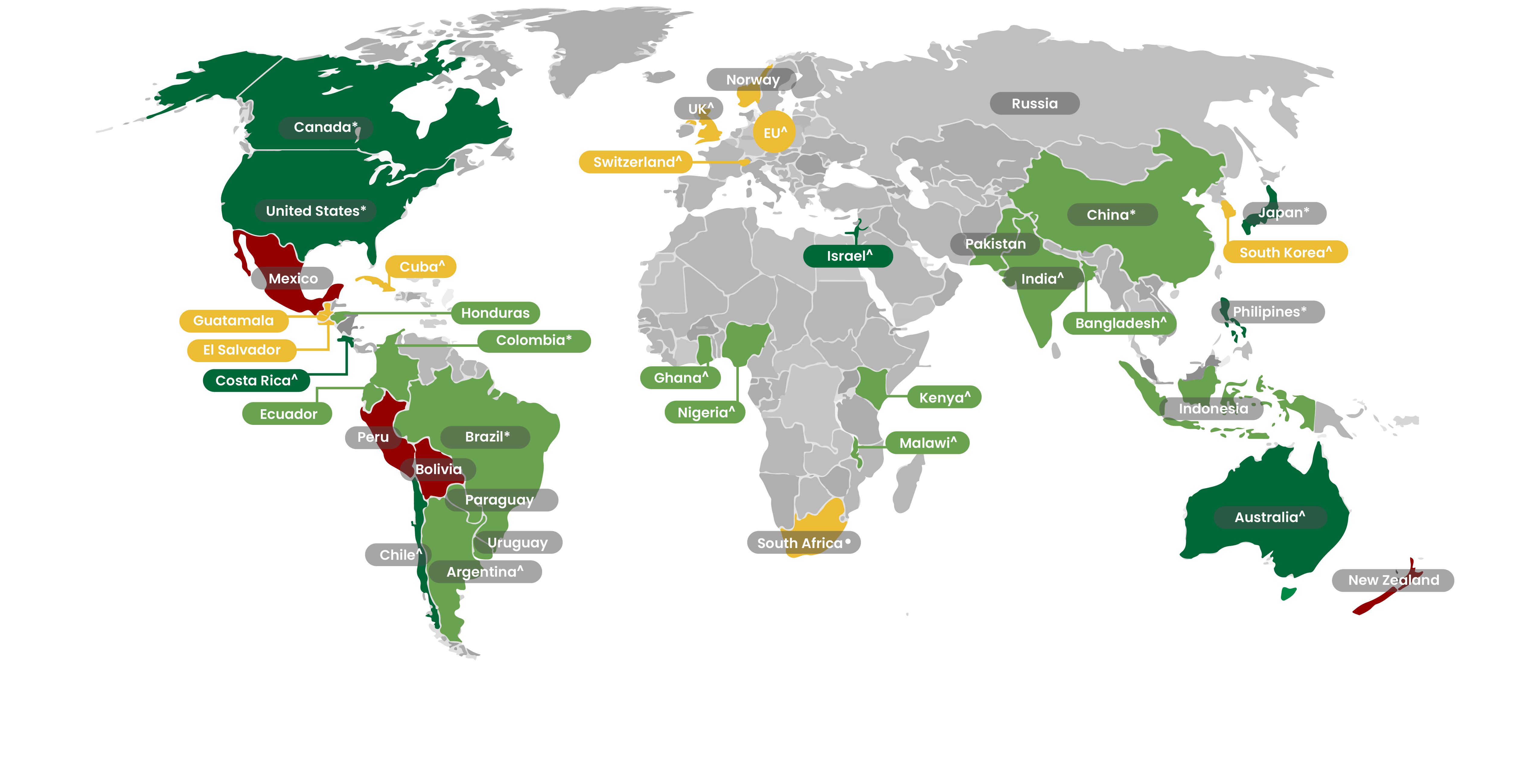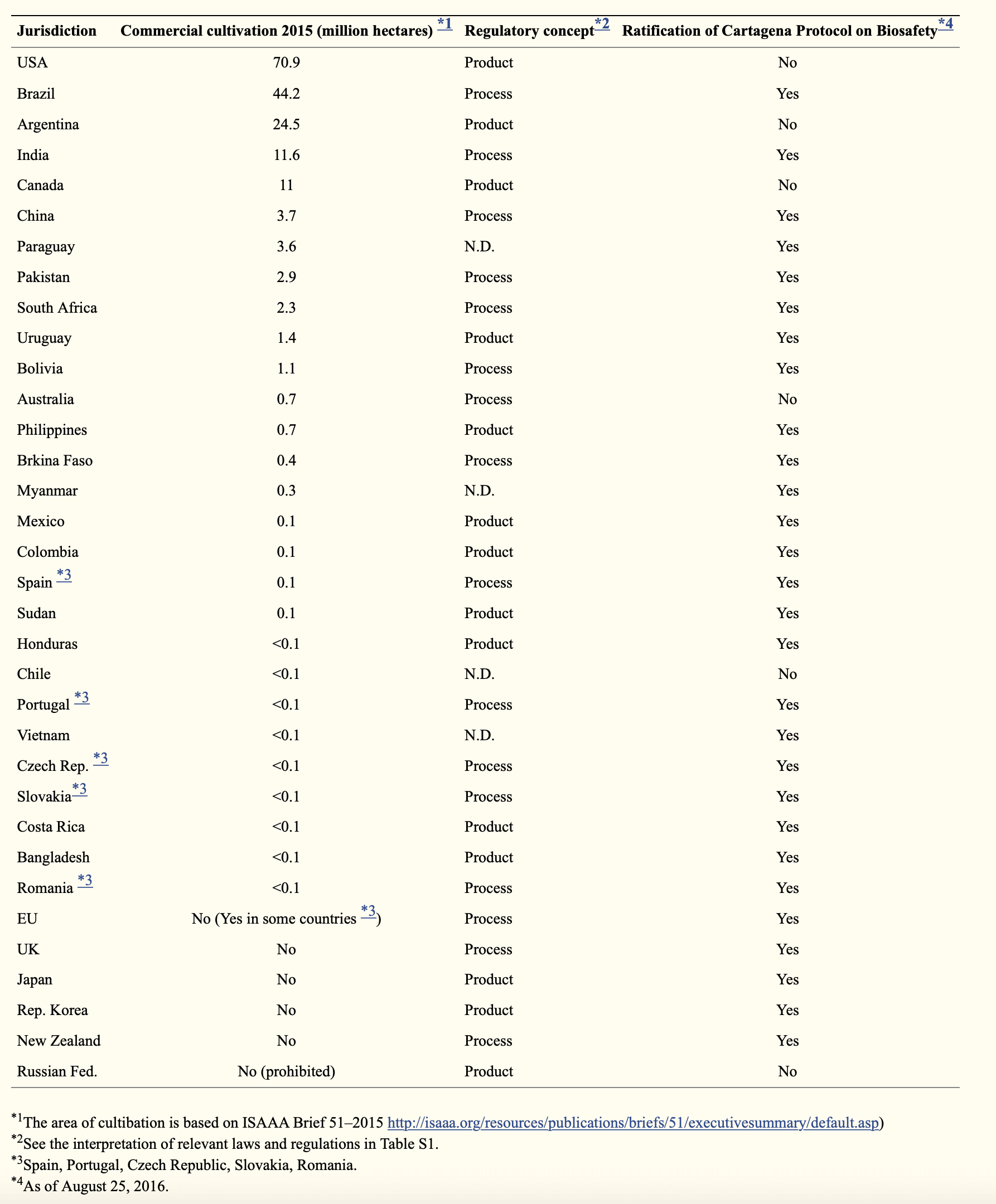



In 2020, the Department of Biotechnology published draft guidelines for gene editing regulation that require additional safety and efficacy testing for gene-edited organisms. The guidelines continue to be extensively discussed and debated. The guidelines regulate the process used to create gene-edited plants rather than focusing on the characteristics of the final products, as is typically the case in the US and many other countries. A tiered regulatory approval process is proposed, with each tier requiring testing and oversight.
Group I includes organisms edited “with one or a few base pair edits or deletions” (sometimes called SDN-1 techniques) and requires confirmation that the gene editing was successful, though the data requirements for confirmation are extensive. Oversight would be done by the research institution’s internal bio-safety committee. Oversight would be done by the research institution’s internal bio-safety committee. Group II includes organisms “whose cells harbour a few or several base pair edits” (sometimes called SDN-2 techniques) and require more intensive trials and data to ensure the edits were successful. It is unclear exactly how distinctions between Group I and Group II plants would be determined or who would make that decision. Group III are organisms with large DNA changes, including insertion of foreign DNA (sometimes called SDN-3 techniques) and require the same extensive testing as GMOs, including safety testing for human health, animals, and the environment, with approvals to be obtained from the Institutional Biosafety Committee (IBSC), the Review Committee on Genetic Manipulation (RCGM), and the Genetic Engineering Appraisal Committee (GEAC).
The Genetic Engineering Appraisal Committee (GEAC) is responsible for the approval of genetically engineered organisms for research, development and cultivation. There are no defined timelines for regulatory approval of gene-edited products. Prior to commercial approval or importation, current Indian regulations stipulate that the GEAC must conduct an appraisal of all biotech food and agricultural products, and of products derived from biotech plants and animals. There are no regulations on commercial production or marketing of cloned animals.
Products/Research
- Cloned buffalo heifer: National Dairy Institute successfully cloned a buffalo heifer in 2009, and numerous cloned calves have been delivered since.
- Mosquito control research: An unnamed Indian company licensed research from a UK company and successfully produced male mosquitoes that contain a gene that causes their progeny to die, which could help slow the spread of diseases like dengue fever and Zika. The Indian company is conducting lab and contained facility trials.
Regulatory Timeline
2020: Draft guidelines published by the Department of Biotechnology propose tiered regulation where two types of gene editing are highly regulated.
1990: Recombinant DNA Guidelines developed.
2003: Cartagena Protocol (an international agreement) ratified, which protects the transport and use of organisms modified by biotechnology.
1989: Rules for the Manufacture, Use/Import/Export/Storage of Hazardous Microorganisms/Genetically Engineered Organisms or Cells, 1989, known as the Rules, 1989, finalized, which regulate research, development, large-scale use and import of genetically engineered organisms and products.
NGO Reaction
Environmental and consumer groups, often supported by Greenpeace, campaign against genetically engineered organisms and products, and have been influential in blocking the introduction of biotechnology, arguing that “GE crops harm the environment” and pose risks to human health. The most aggressive critic is Vandana Shiva, an India-born global anti-biotechnology activist, who maintains that the Green Revolution caused more problems than it solved and that biotechnology is a form of corporate colonialism. She opposes even the testing of biotechnology crops and actively promotes direct action campaigns, including eco-terrorism to destroy field trials and research.
Additional Resources
- Genetic Literacy Project’s FAQ on gene editing
- USDA Agricultural Biotechnology Annual: India