
View the EU Gene Drives summary for more information.
United Kingdom: Gene Drives


Mostly Prohibited
The UK may develop new regulations after they formally separate from the EU, but gene editing in the UK currently falls under EU regulations.
Human / Health
Gene Drives
Agriculture
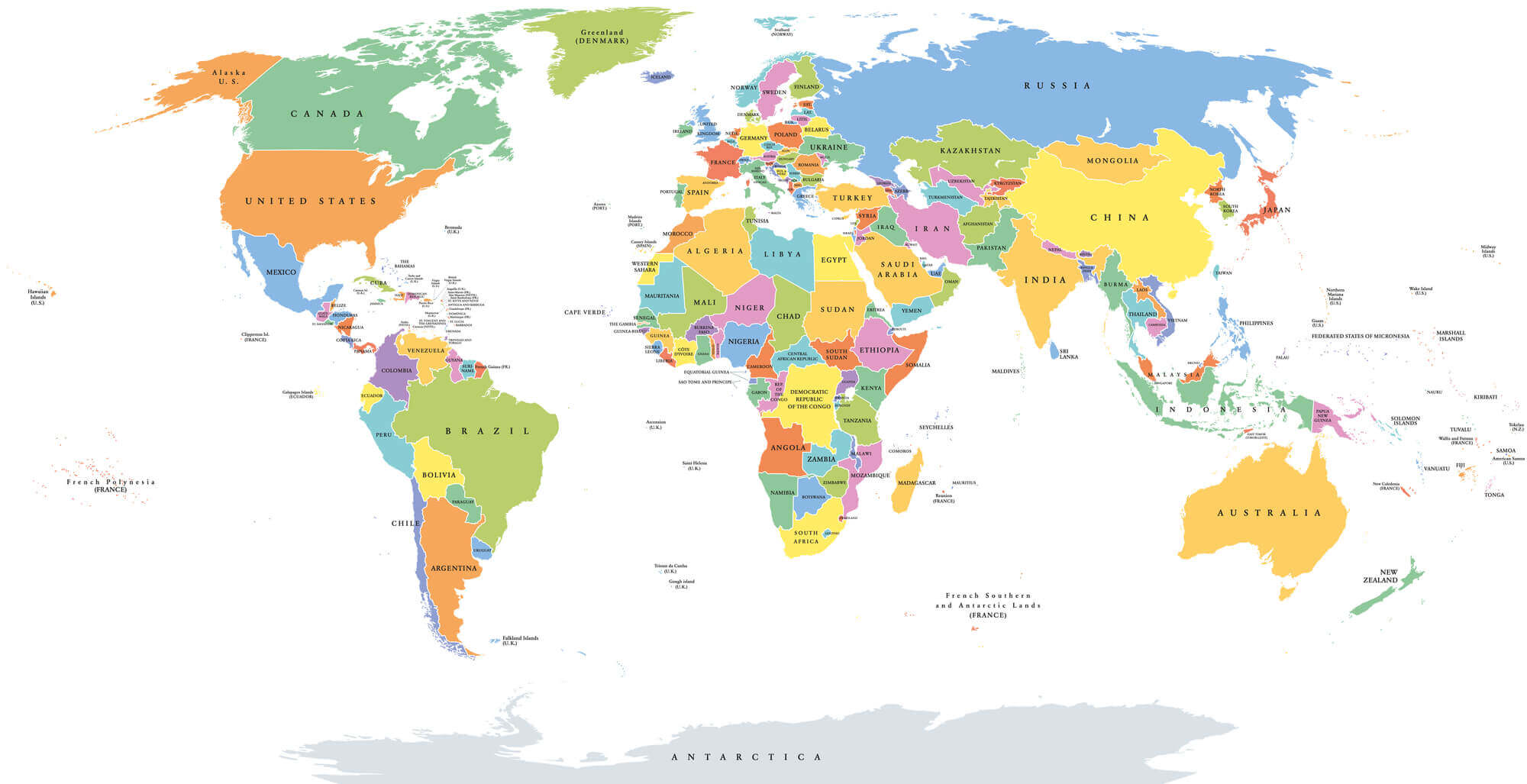
Click on a country (eg. Brazil, US) or region (eg. European Union) below to find which human / health products and processes are approved or in development and their regulatory status.
European Union
Brazil
New Zealand
United States
Australia
Canada
China
United Kingdom
Israel
Argentina
Japan
Mexico
Russia
Chile
Uruguay
Paraguay
India
Africa
Ukraine
Southeast Asia
Central America
Colombia
Norway
Ecuador
Africa
Argentina
Australia
Brazil
Canada
Central America
Chile
China
Colombia
Ecuador
European Union
India
Israel
Japan
Mexico
New Zealand
Norway
Paraguay
Russia
Southeast Asia
Ukraine
United Kingdom
United States
Uruguay
Human / Health Gene Editing Index
Compare Regulatory Restrictions Country-to-Country
Gene editing regulations worldwide are evolving. The Gene Editing Index ratings below represent the current status of gene editing regulations and will be updated as new regulations are passed.
Colors and ratings guide
| Regulation Status | Rating |
|---|---|
| Determined: No Unique Regulations* | 10 |
| Lightly Regulated | 8 |
| Proposed: No Unique Regulations† | 6 |
| Ongoing Research, Regulations In Development | 5 |
| Highly Regulated | 4 |
| Mostly Prohibited | 2 |
| Limited Research, No Clear Regulations | 1 |
| Prohibited | 0 |
Lightly Regulated: Gene and stem cell therapies regulated with minimal restrictions and requirements.
*Determined: No Unique Regulations: Gene and stem cell therapies regulated as phamaceuticals with no additional restrictions.
†Proposed: No Unique Regulations: Decrees under consideration for gene and stem cell therapies that would not require unique regulations beyond current restrictions on pharmaceuticals.
Therapeutic:
Gene editing of adult human cells, including gene therapy and stem cell therapy, that is used to treat and cure disease. Recent breakthroughs include CAR T-cell therapy, which uses patients’ own immune cells to treat their cancer.
Germline:
Gene editing of the human embryo or germline that results in genetic changes that are passed down to the next generation. This type of gene editing is the most controversial because changes are inherited and because it could theoretically be used to create “designer babies”. A Chinese scientist announced in 2018 that he had successfully edited twins that were brought to term. International backlash from the announcement has resulted in China and other countries working to clarify regulations on germline gene editing.
Rating by Country / Region
Click each column header and arrow to sort the countries / regions
Swipe right/left if all columns aren't visible
| Country / Region | Therapeutic | Germline | Human Rating |
|---|---|---|---|
| Japan | 8 | 8 | 8 |
| Brazil | 4 | 0 | 2 |
| Canada | 4 | 0 | 2 |
| Russia | 10 | 5 | 7.5 |
| Argentina | 5 | 1 | 3 |
| Israel | 8 | 2 | 5 |
| Australia | 4 | 0 | 2 |
| China | 8 | 4 | 6 |
| US | 4 | 0 | 2 |
| Chile | 4 | 1 | 2.5 |
| New Zealand | 4 | 0 | 2 |
| Ukraine | 10 | 5 | 7.5 |
| Central America | 1 | 1 | 1 |
| Paraguay | 1 | 1 | 1 |
| Uruguay | 1 | 1 | 1 |
| India | 4 | 0 | 2 |
| UK | 4 | 4 | 4 |
| Mexico | 8 | 0 | 4 |
| EU | 4 | 0 | 2 |
Click on a country (eg. Brazil, US) or region (eg. European Union) below to find which gene drive products and processes are approved or in development and their regulatory status.
European Union
European Union
Brazil
Brazil
New Zealand
New Zealand
United States
United States
Australia
Australia
Canada
Canada
China
China
United Kingdom
United Kingdom
Israel
Israel
Argentina
Argentina
Japan
Japan
Mexico
Mexico
Russia
Russia
Chile
Chile
Uruguay
Uruguay
Paraguay
Paraguay
India
India
Africa
Africa
Ukraine
Ukraine
Southeast Asia
Southeast Asia
Central America
Central America
Colombia
Colombia
Norway
Norway
Ecuador
Ecuador
Africa
Africa
Argentina
Argentina
Australia
Australia
Brazil
Brazil
Canada
Canada
Central America
Central America
Chile
Chile
China
China
Colombia
Colombia
Ecuador
Ecuador
European Union
European Union
India
India
Israel
Israel
Japan
Japan
Mexico
Mexico
New Zealand
New Zealand
Norway
Norway
Paraguay
Paraguay
Russia
Russia
Southeast Asia
Southeast Asia
Ukraine
Ukraine
United Kingdom
United Kingdom
United States
United States
Uruguay
Uruguay
Gene Drive Index
Compare Regulatory Restrictions Country-to-Country
Gene editing regulations worldwide are evolving. The Gene Editing Index ratings below represent the current status of gene editing regulations and will be updated as new regulations are passed.
Colors and ratings guide
| Regulation Status | Rating |
|---|---|
| Determined: No Unique Regulations* | 10 |
| Lightly Regulated | 8 |
| Proposed: No Unique Regulations† | 6 |
| Ongoing Research, Regulations In Development | 5 |
| Highly Regulated | 4 |
| Mostly Prohibited | 2 |
| Limited Research, No Clear Regulations | 1 |
| Prohibited | 0 |
Lightly Regulated: Gene drives regulated through existing biotechnology laws.
*Determined: No Unique Regulations: Gene and stem cell therapies regulated as phamaceuticals with no additional restrictions.
†Proposed: No Unique Regulations: Decrees under consideration for gene and stem cell therapies that would not require unique regulations beyond current restrictions on pharmaceuticals.
Gene Drives:
Genetic engineering technology used to transmit a characteristic throughout a wild population. For example, it can be used to develop mosquitoes that only have female offspring. If released into the wild, these mosquitoes would breed with wild malaria-carrying mosquitoes and over time would eliminate the population. Scientists are interested in using this technology to help eradicate disease-carrying insects and control invasive species, but questions about how gene drives will be directed and controlled are still being fleshed out.
Rating by Country / Region
Click each column header and arrow to sort the countries / regions
Swipe right/left if all columns aren't visible
| Country / Region | Gene Drives | Gene Drive Rating |
|---|---|---|
| Japan | 1 | 1 |
| Brazil | 8 | 8 |
| Canada | 8 | 8 |
| Russia | 1 | 1 |
| Argentina | 1 | 1 |
| Israel | 1 | 1 |
| Australia | 4 | 4 |
| China | 1 | 1 |
| US | 4 | 4 |
| Chile | 1 | 1 |
| New Zealand | 4 | 4 |
| Ukraine | 1 | 1 |
| Central America | 1 | 1 |
| Paraguay | 1 | 1 |
| Uruguay | 1 | 1 |
| India | 1 | 1 |
| UK | 2 | 2 |
| Mexico | 1 | 1 |
| EU | 2 | 2 |
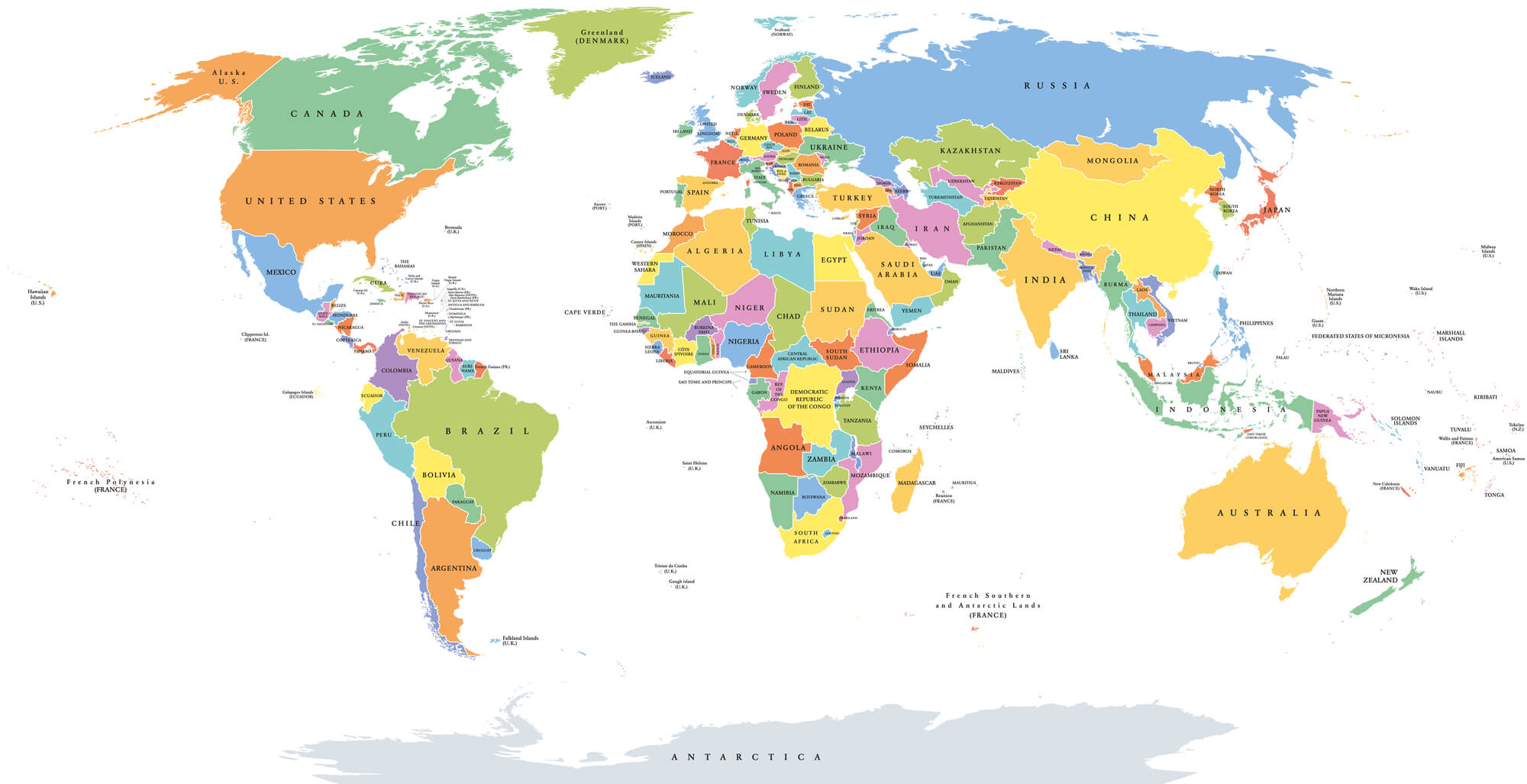
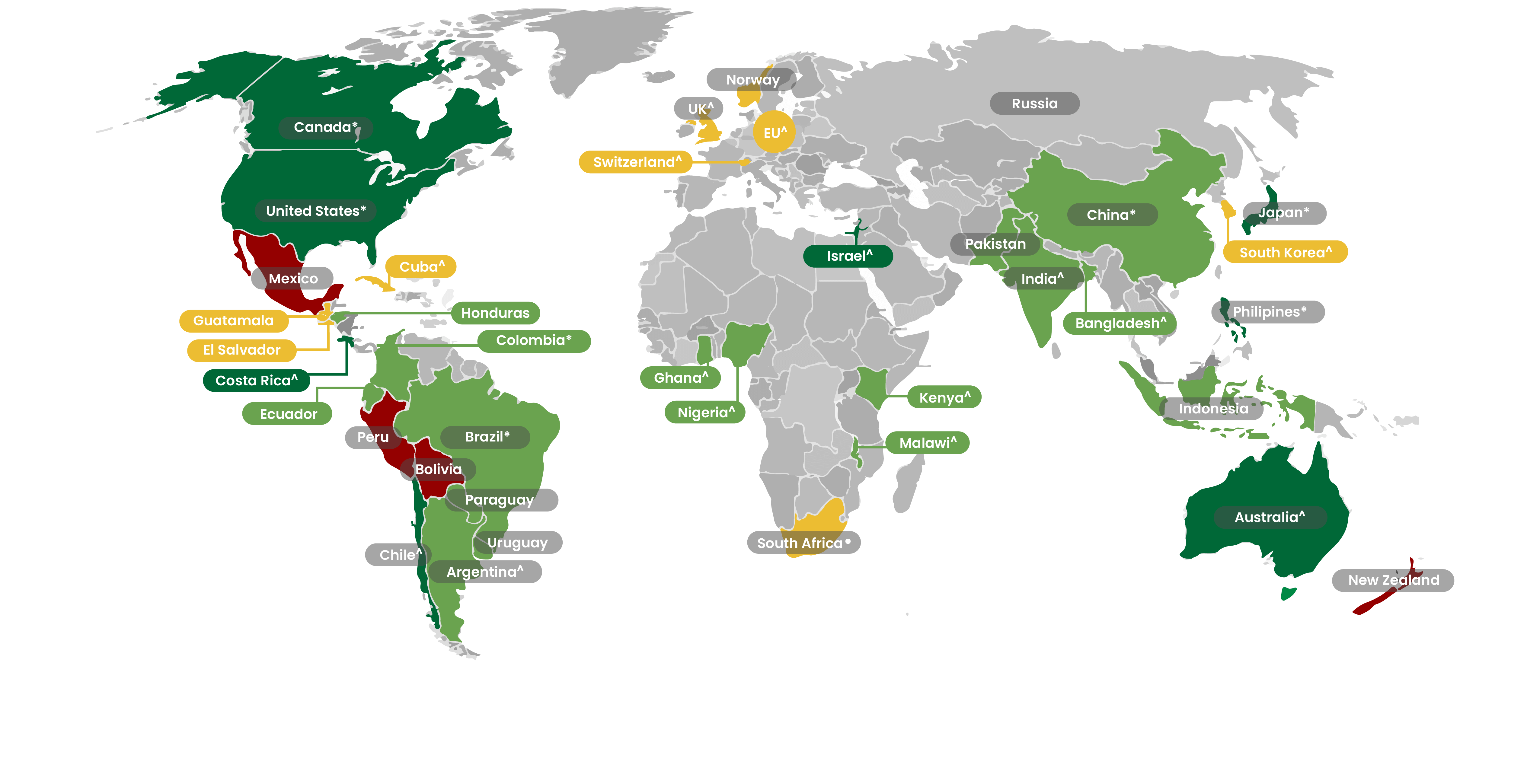
Regulations of gene editing and new breeding techniques (NBTs) worldwide are quickly evolving. Click on a country or region for more information on its regulatory status, what crops are approved or in development, and reactions from regional NGOs. The Gene Editing Index ratings represent their current status and will be updated as new regulations are approved.
European Union
Switzerland
Switzerland
Brazil
New Zealand
United States
Australia
Canada
China
United Kingdom
Israel
Argentina
Japan
Mexico
Russia
Chile
Uruguay
Paraguay
India
Africa
Ukraine
Southeast Asia
Central America
Colombia
Norway
Ecuador
Cuba
Cuba
Switzerland
Peru
Cuba
Africa
Argentina
Australia
Brazil
Canada
Central America
Chile
China
Colombia
Cuba
Cuba
Ecuador
European Union
India
Israel
Japan
Mexico
New Zealand
Norway
Paraguay
Russia
Southeast Asia
Ukraine
United Kingdom
United States
Uruguay
Agriculture Gene Editing Index
Compare Regulatory Restrictions Country-to-Country
Gene editing regulations worldwide are evolving. The Gene Editing Index ratings below represent the current status of gene editing regulations and will be updated as new regulations are passed.
Ratings Guide
| Regulation Status | Rating |
|---|---|
| Determined: No Unique Regulations* | 10 |
| Lightly Regulated | 8 |
| Proposed: No Unique Regulations† | 6 |
| Ongoing Research, Regulations In Development | 5 |
| Highly Regulated | 4 |
| Mostly Prohibited | 2 |
| Limited Research, No Clear Regulations | 1 |
| Prohibited | 0 |
Lightly Regulated: Some or all types of gene editing are regulated more strictly than conventional agriculture, but not as strictly as transgenic GMOs.
*Determined: No Unique Regulations: Gene-edited crops that do not incorporate DNA from another species are regulated as conventional plants with no additional restrictions.
†Proposed: No Unique Regulations: Decrees under consideration for gene-edited crops that do not incorporate DNA from another species would no require unique regulations beyond current what is imposed on conventional breeding.
Crops/Food:
Gene editing of plants and food products. Research and development has mostly focused on disease resistance, drought resistance, and increasing yield, but more recent advances have produced low trans-fat oils and high-fiber grains.
Animals:
Gene editing of animals, not including animal research for human drugs and therapies. Fewer gene edited animals have been developed than gene edited crops, but scientists have developed hornless and heat-tolerant cattle and fast-growing tilapia may soon be the first gene edited animal to be consumed.
- * Approved crops
- ^ Field and/or lab trials ongoing
Rating by Country / Region
Click either column header to sort by that column
Swipe right/left if all columns aren't visible
| Country / Region | Food / Crops | Animals | Ag Rating |
|---|---|---|---|
| Ecuador | 10 | 10 | 10 |
| Norway | 6 | 6 | 6 |
| Africa | 5 | 5 | 5 |
| Japan | 8 | 8 | 8 |
| Brazil | 10 | 10 | 10 |
| Canada | 8 | 8 | 8 |
| Russia | 5 | 5 | 5 |
| Argentina | 10 | 10 | 10 |
| Israel | 10 | 5 | 7.5 |
| Australia | 8 | 8 | 8 |
| Switzerland | 5 | 5 | 5 |
| China | 5 | 5 | 5 |
| US | 10 | 4 | 7 |
| Chile | 10 | 1 | 5.5 |
| New Zealand | 4 | 4 | 4 |
| Ukraine | 1 | 1 | 1 |
| Central America | 6 | 6 | 6 |
| Paraguay | 10 | 10 | 10 |
| Uruguay | 6 | 6 | 6 |
| India | 6 | 6 | 6 |
| UK | 2 | 2 | 2 |
| Mexico | 1 | 1 | 1 |
| EU | 2 | 2 | 2 |
| Colombia | 10 | 1 | 5.5 |
| Country / Region | Crops / Food Rating |
|---|---|
| Australia^ | 4 |
| Canada* | 4 |
| Chile^ | 4 |
| Costa Rica^ | 4 |
| Israel^ | 4 |
| Japan* | 4 |
| Philippines* | 4 |
| United States* | 4 |
| Argentina^ | 3 |
| Bangladesh^ | 3 |
| Brazil* | 3 |
| China* | 3 |
| Colombia* | 3 |
| Ecuador | 3 |
| Ghana^ | 3 |
| Honduras | 3 |
| India^ | 3 |
| Indonesia | 3 |
| Kenya^ | 3 |
| Malawi^ | 3 |
| Nigeria^ | 3 |
| Pakistan | 3 |
| Paraguay | 3 |
| Uruguay | 3 |
| Cuba^ | 2 |
| Guatamala | 2 |
| El Salvador | 2 |
| European Union^ | 2 |
| Norway | 2 |
| South Africa^ | 2 |
| South Korea^ | 2 |
| Switzerland^ | 2 |
| United Kingdom^ | 2 |
| Bolivia | 1 |
| Mexico | 1 |
| New Zealand | 1 |
| Peru | 1 |
| Russia | 0 |
Approved Gene Edited / NBT Crops
Current list of foods developed by New Breeding
Techniques that are approved for sale.
| Product | Description | Country | Company |
|---|---|---|---|
| Waxy corn | Corn with high starch content developed using CRISPR. | Approved: Japan (2024) | Corteva Agriscience |
| Non-browning lettuce | GreenVenus Non-browning romaine lettuce. | Approved: United States (2024) | Intrexon |
| Slick-coat cattle | PRLR-SLICK cattle Cows developed using CRISPR to grow short hair, which results in improved heat tolerance, which allows them to gain weight more easily. | Approved: United States (2024) | Acceligen |
| Fungal resistant wheat | Edit approved that confer resistance to a common fungal infection called powdery mildew that can be applied to different varieties. | Approved: China (2024) | Suzhou, Chinese Academy of Sciences |
| Mustard greens | Conscious Greens Milder, less bitter mustard green developed using CRISPR-Cas12a. | Approved, available: United States (2023) | Pairwise |
| Non-browning banana | Banana developed using CRISPR to slow the browning process for prolonged shelf-life. | Approved: Philippines (2023) | Tropic Biosciences |
| Seabream | Red Seabream Fish developed using CRISPR disabling a gene suppressing muscle growth, allowing the fish to grow larger. | Approved, available: Japan (2021) | Regional Fish Institute |
| GABA tomato | Sicilian Rouge Tomato edited using CRISPR to contain more GABA, a compound in tomato fruits and known to lower blood pressure. | Approved, available: Japan (2021) | Sanantech Seed |
| Fast growing pufferfish | Tiger Pufferfish Fish developed using CRISPR disrupting a gene controlling appetite, allowing the fish to eat more and grow faster. | Approved, available: Japan (2021) | Regional Fish Institute |
| High-oleic soybean oil | Calyno Soybean oil with fewer saturated fats and zero trans fats, developed using a gene-editing technique called TALENs. | Approved, available: United States (2019) | Calyxt |
| Non-browning mushroom | White Button Mushroom Non-browning mushroom developed using a gene-editing technique called TALENs. | Approved: United States (2016) | Pennsylvania State University |
| Non-browning apple | Arctic Apple Non-browning apple (multiple varieties) developed with RNA interference, a more traditional New Breeding Technique (NBT). Varieties include Golden, Granny, Fuji, Gala, Honey. | Approved, available: Canada (2017) Approved, available: United States (2015) | Okanagan Specialty Fruits |
| Non-browning potato | White Russet Potato Non-browning, blight protection, lowered sugars, and low acrylamide potato developed with RNA interference. | Approved, available: United States (2015) Available: Canada (2015) | Simplot |
| Rapeseed/Canola | Developed to be herbicide-tolerant canola using oligonnucleotide-direct mutagenesis (ODM). | Approved: United States (2014) Canada (2013) | Cibus |
Global gene editing regulatory landscape
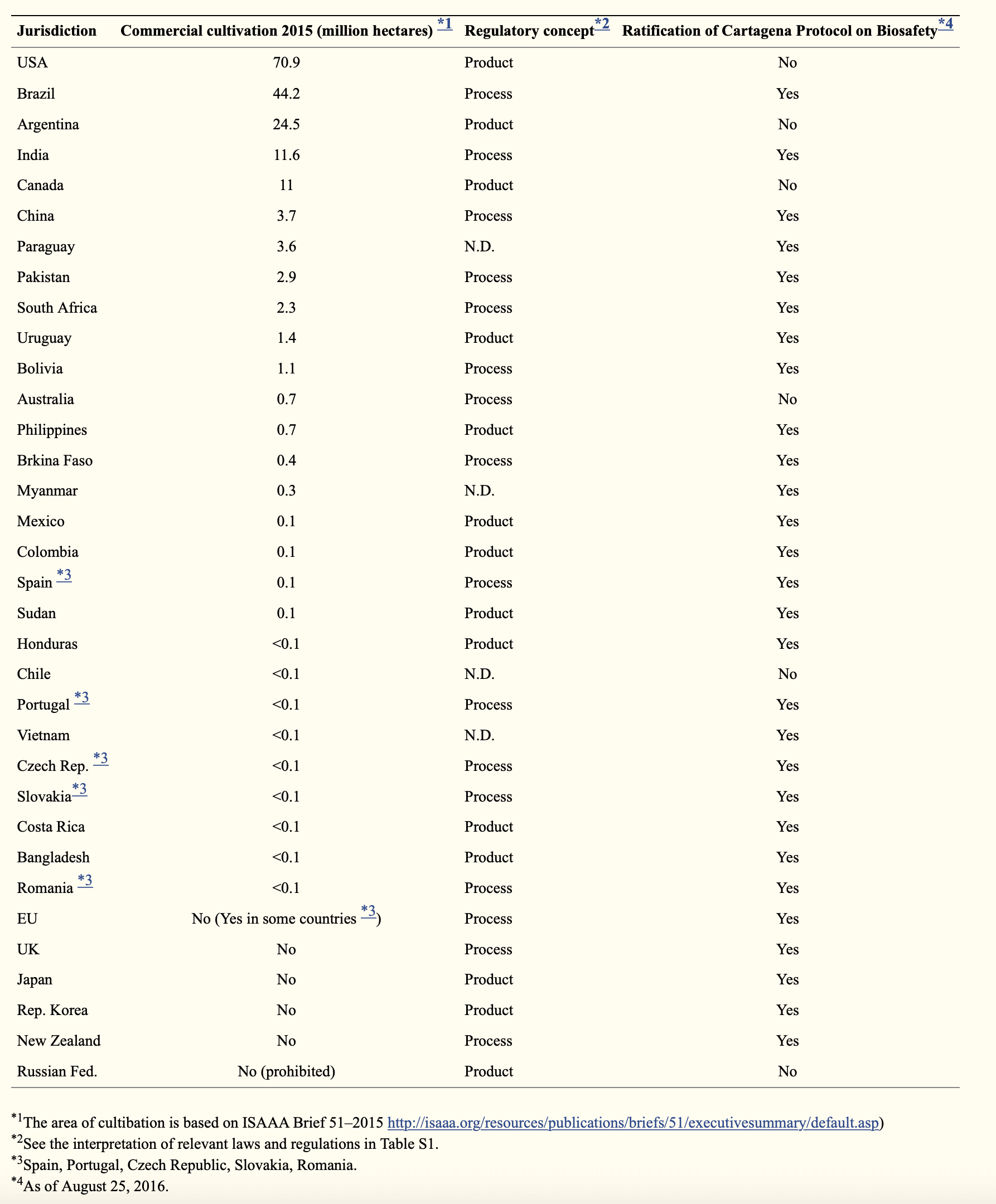
The regulations on genetically engineered crops and animals are emerging out of the regulatory landscape developed for transgenic GMOs. Regulations across 34 countries where transgenic or gene edited crops and animals are commercially allowed (as of 12/19) are guided in part by two factors:
Whether the country has ratified the international agreement that took effect in 2003 that aims to ensure the safe handling, transport and use of living modified organisms (LMOs) resulting from biotechnology that may impact biological diversity, also taking into account potential risks to human health. It entered into force for those nations that signed it in 2003. It applies the ‘precautionary approach as contained in the Rio Declaration on Environment and Development. The US, Canada, Australia and Chile and the Russian Federation have not signed the treaty.
Whether regulations are based on the genetic process used to create the trait (conventional, mutagenesis, transgenesis, gene editing, etc.) or the final product.Transgenic crops and animals (aka GMOs) are product regulated in many countries including the US and Canada, while the EU, India, China and others regulate based on how the product is made. There is almost an equal number of countries with product- and process-based regulations. It’s not clear how much this distinction matters. It’s somewhat true that countries with product-based regulation have more crops approved and the approval process is more streamlined, but there are contradictions. For example, Brazil and Argentina have emerged as GMO super powers using different regulatory concepts, while there is no GMO commercial cultivation in Japan, North Korea, and the Russian Federation, which employ product-based regulations. How this will effect gene editing regulations is also unclear. For example, Japan, which has no commercialized GMOs, is emerging as a leader in the introduction of gene edited crops.