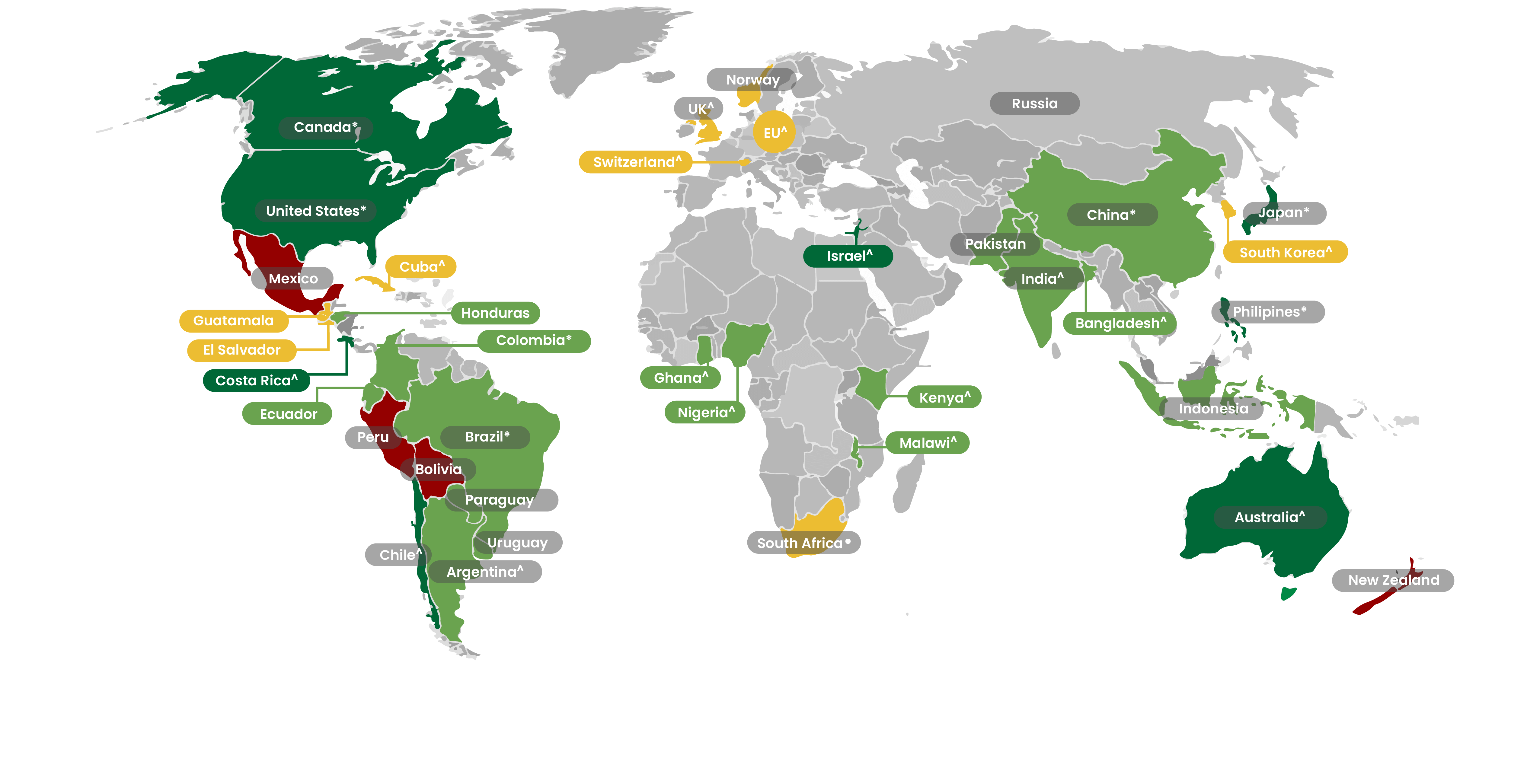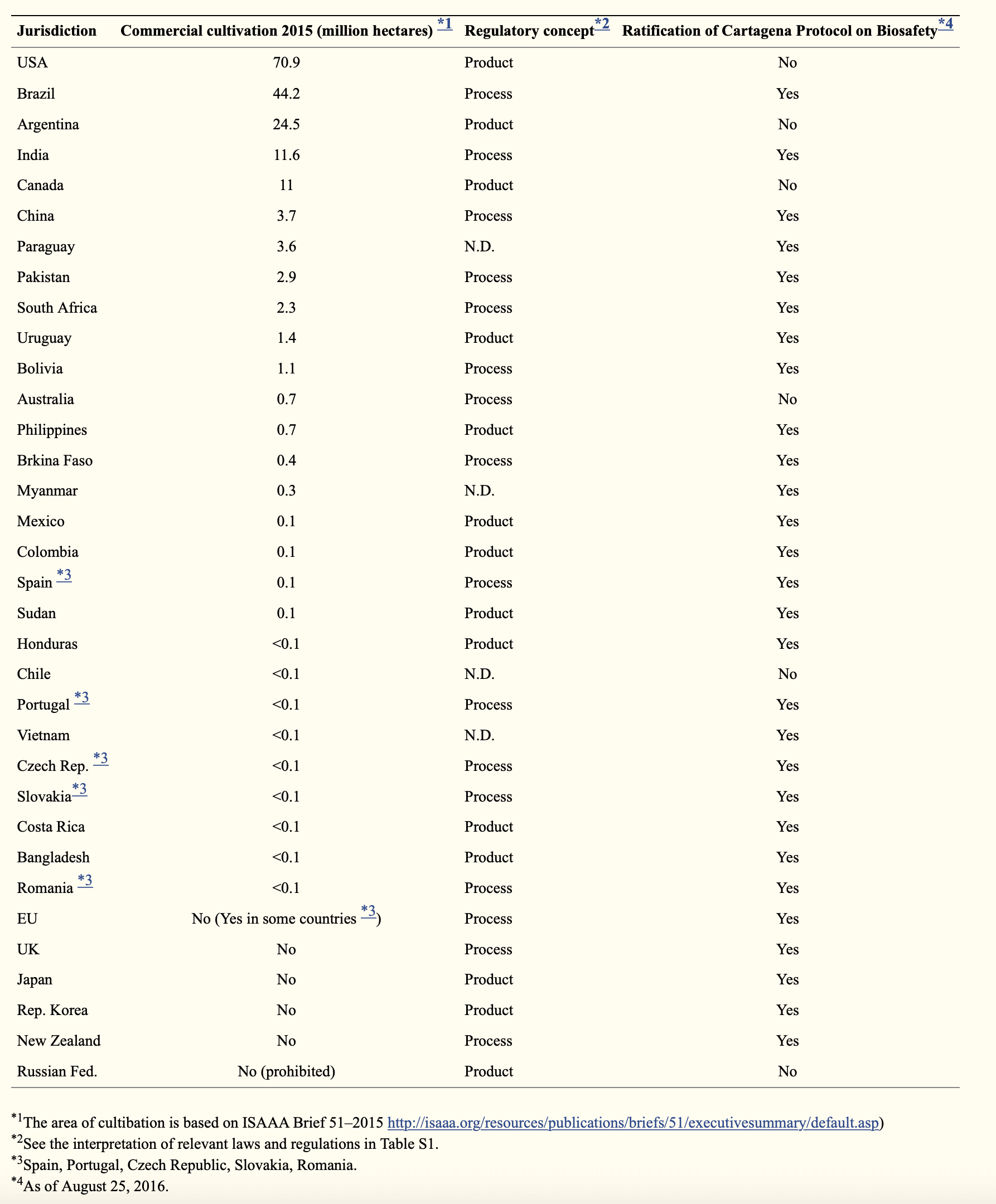



Peru remains one of the more restrictive countries in Latin America on agricultural biotechnology. Law 29811 imposed a moratorium on the entry and production of living modified organisms for cultivation or breeding, and Law 31111 extended that moratorium through December 31, 2035. The current framework is implemented through Supreme Decree No. 012-2023-MINAM, which keeps the moratorium in place for organisms that fall within Peru’s GMO definition. The moratorium targets cultivation and environmental release, not every form of laboratory research.
What changed in 2026 is not the moratorium itself, but the way Peru decides whether a product is covered by it. In March 2026, the Ministry of the Environment approved new guidelines for determining whether products developed with newer biotechnological tools qualify as living modified organisms under existing law. The ministry later said the guidelines were designed to support scientific research and help determine, on a scientific basis, whether products obtained through techniques such as gene editing should be treated as GMOs.
In practice, that creates a case-by-case filter rather than a blanket exemption. Peru has not lifted its moratorium, and it has not created a separate gene-editing law. Instead, it now has a formal pathway for deciding whether a given product developed with new breeding tools falls inside or outside the existing moratorium. That is a meaningful shift because it opens the door for some transgene-free products to be treated differently from classic transgenic GMOs.
The move is more limited than Peru’s failed 2024 reform effort. In which the agriculture ministry tried to loosen the moratorium for some crops, but the Peruvian congress rejected the proposal. The new 2026 guidelines work within the old system rather than replacing it.
The practical effect is to reduce uncertainty for research and early-stage product development. The Ministry of the Environment has framed the new rules as a way to support scientific work and strengthen Peru’s agrobiodiversity, including crops with better resistance to drought, frost, pests, and other production pressures.
For food-producing animals, including aquaculture species, Peru remains restrictive in practice. The moratorium still applies to organisms intended for breeding or release into the environment, and reports do not indicate any approved gene-edited animals in commercial production. Research exists, but the country remains in a pre-commercial phase for animal applications.
In sum, Peru is no longer best described as a simple blanket ban on all gene editing. It still prohibits products that are classified as GMOs under the moratorium, but it now has a clearer case-by-case process that could allow some transgene-free products to fall outside that category.
NGO Reaction
Opposition in Peru is still rooted in biodiversity, seed sovereignty, and the protection of small farmers rather than in fine technical distinctions between gene-editing methods. Conveagro has argued that weakening the moratorium would threaten biodiversity and food security, while the broader campaign “Biodiversity is Our Identity” has long framed Peru’s anti-GMO position as part of a wider defense of native crops, rural livelihoods, and national food identity.
There has not yet been a major, coordinated public campaign aimed specifically at the March 2026 guidelines. But the political pattern is familiar: Peru’s anti-GMO coalition has already shown that it can block broader reform, and it is likely to view any pathway that could ease market access for gene-edited products with the same caution. A recent Conveagro statement shows that the coalition remains firmly opposed to reopening the moratorium.
Updated: 06/15/2026