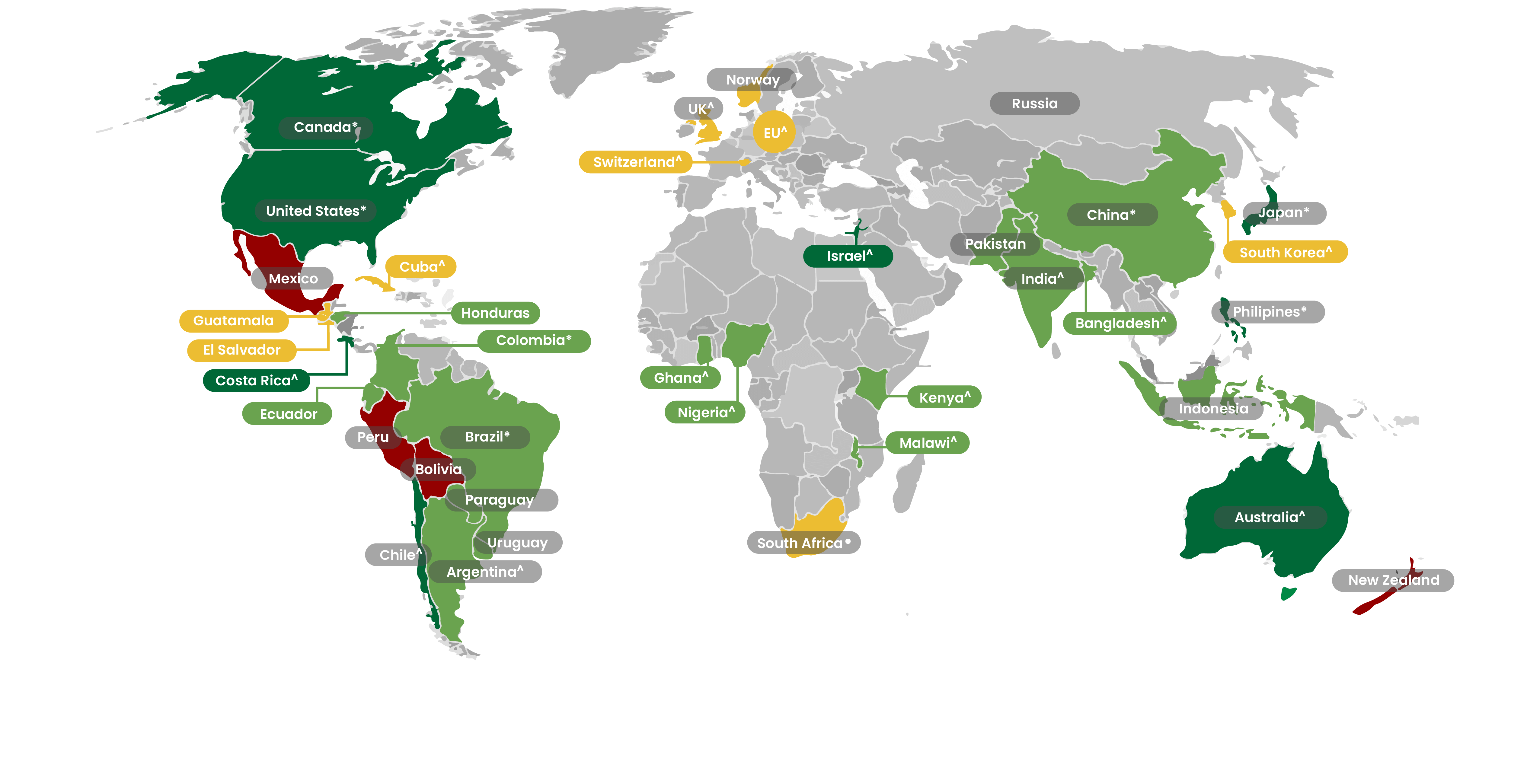



Gene-edited crops and food are regulated as conventional plants unless they contain foreign DNA, after a dossier is submitted to determine if they are exempt. Gene-edited crops are assessed on a case-by-case basis based on the characteristics of the final product, not on the process used to develop the product. There are no commercially available genetically engineered plants in Israel.
Genetically engineered organisms are regulated by the Ministry of Agriculture and Rural Development and the Ministry of Health. The Ministry of Agriculture and Rural Development oversees the Plant Protection and Inspection Service (PPIS) and the Israeli National Committee for Transgenic Plants (NCTP). In 2016, the NCTP decided that as long as gene-edited crops do not contain DNA from other species, they would not be subject to GMO regulations, which are regulated by the Seed Act.
Under the Seed Regulations, genetically modified plants require permission from the Director of the PPIS, in consultation with the National Committee for Transgenic Plants, in order to be sold. The Ministry of Health stated that all new food products, including genetically engineered ones, must undergo risk assessment before approval.
NGO Reaction
The Israeli Kashrut, a religious authority, has said that genetic modification does not impact “kosher” status because of the “microscopic” apportionment of the modified material. This is contested by some Jewish groups both inside and outside of Israel, who have claimed this is a violation of scriptural prohibitions against mixed breeding in crops.